Save big on select artwork!

The Evolution of Art: A Reflection of Human Society and Culture
1/29/20261 min read
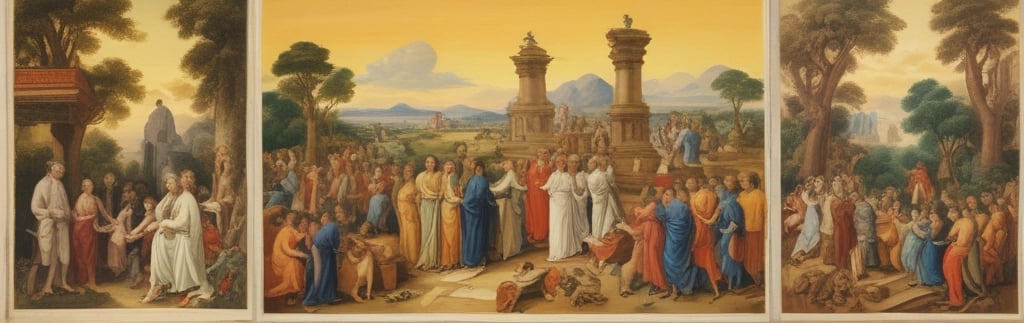
The Origins of Artistic Expression
The evolution of art has been intertwined with human existence from the very beginning. Early humans created intricate cave paintings, utilizing natural pigments to depict their surroundings, daily activities, and spiritual beliefs. This primordial form of expression served not only as a means of communication but also as a way to convey complex ideas and emotions. The inherent need to represent the world through artistic means can be seen as the first step in the long journey of art's integration into society and culture.
Art Through the Ages
As civilizations evolved, so too did the forms of art. The advent of agriculture and the rise of urban societies brought new dimensions to art, allowing for specialization and innovation. In Ancient Egypt, for instance, monuments and hieroglyphics were not only aesthetically pleasing but also served religious and political purposes. Similarly, in Greece, the classical period heralded the birth of fine arts, where sculpture and architecture flourished, reflecting ideals of beauty, harmony, and the human experience. The Renaissance further propelled the evolution of art, emphasizing individualism and the pursuit of knowledge, setting the stage for modern artistic movements.
The Role of Art in Contemporary Society
Today, art continues to shape and mirror societal dynamics, transcending cultural boundaries. With the advent of digital technology and social media, the way art is created, shared, and interpreted has transformed significantly. Contemporary artists often tackle pressing social issues, using their work as a platform for dialogue and change. This evolution of art reflects not just changes in technique but also the continuously shifting perspectives of society. As art becomes more democratized, the very definition of what constitutes art is being challenged and redefined, ensuring its relevance in the modern landscape.
In conclusion, the evolution of art is a testament to humanity's creativity and adaptability. It has woven itself into the fabric of human culture, serving as both a historical record and a mirror to our collective consciousness. As we look to the future, the journey of art is likely to continue, fueled by innovation and the unyielding human desire to express and connect.
Get in touch
Contact@onlinearthub.com
Copyright © 2025 OnlineArtHub | Powered by OnlineArtHub